
Yves Saint Laurent: The Visionary Who Changed Fashion Forever
“Fashions fade, style is eternal.” Few designers embodied this idea as completely as Yves Saint Laurent. Over a career spanning four decades, he transformed women’s fashion by adapting traditionally masculine garments, freeing the female body from restrictive silhouettes, and making sophisticated design accessible beyond the exclusive world of haute couture. His life was marked by extraordinary creativity, personal struggle, artistic passion, and a lifelong partnership with Pierre Bergé, the businessman who helped turn his talent into one of the most influential fashion houses in history.
Childhood in Algeria
Yves Henri Donat Mathieu-Saint-Laurent was born on August 1, 1936, in Oran, Algeria, then a French colony. He grew up in a close-knit middle-class family with his parents, Lucienne and Charles Mathieu-Saint-Laurent, and his two sisters. His father owned an insurance company and a chain of cinemas, and the family often spent its holidays in Trouville, Normandy.
From an early age, Saint Laurent sought refuge in imagination. His delicate manner, quiet voice, and deep shyness made him a target for classmates, but his rich inner world protected him. He loved theater, dance, painting, sculpture, literature, Bach, nineteenth-century opera, and the voice of Maria Callas. He also spent hours studying his mother’s copies of Jardin des Modes, Paris Match, and Vogue. He cut out photographs of models, turned them into paper dolls, and dressed them in clothes that he drew, painted, and sometimes made from pieces of fabric secretly taken from his mother’s dresses.
As a child, he pretended to be a couturier with his own fashion house. During his teenage years, between 1953 and 1954, he developed this fantasy into an imaginary establishment called Yves Mathieu Saint Laurent Haute Couture Place Vendôme. He created entire wardrobes on paper silhouettes, using tempera, markers, watercolors, and fabric. He also built a small wooden stage on which he recreated the sets and costumes of productions playing in Parisian theaters. Long before he entered the professional world, fashion was already his language and his private universe.
The Road to Paris and Christian Dior
At the age of 17, Saint Laurent entered the annual competition organized by the International Wool Secretariat, one of the fashion industry’s most important contests. He placed third in the dress category and traveled to Paris with his mother to receive the prize. Through family connections, he met Michel de Brunhoff, the influential editor-in-chief of French Vogue. Impressed by the young designer’s sketches, de Brunhoff encouraged him to continue his training and move to Paris.
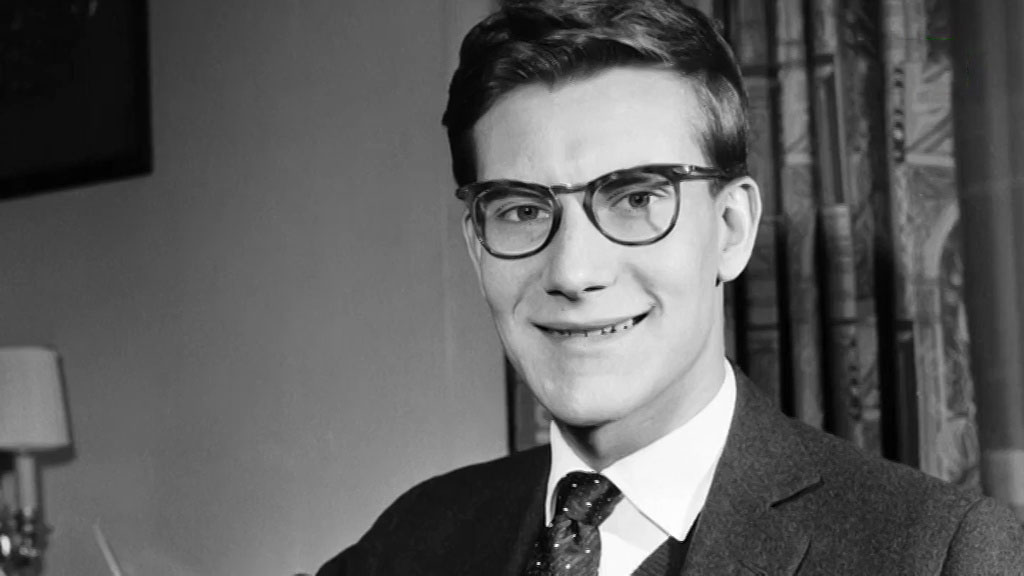
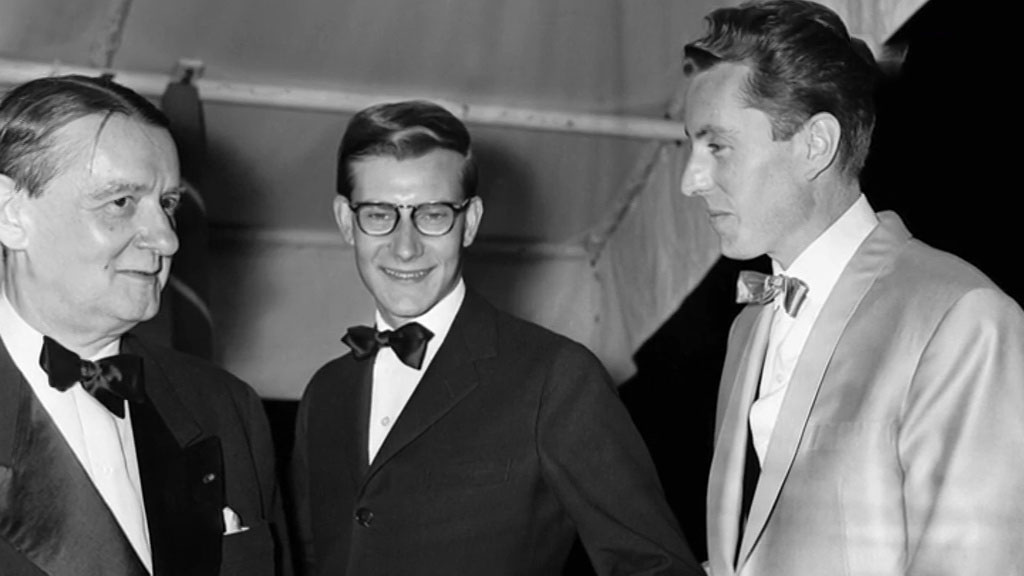
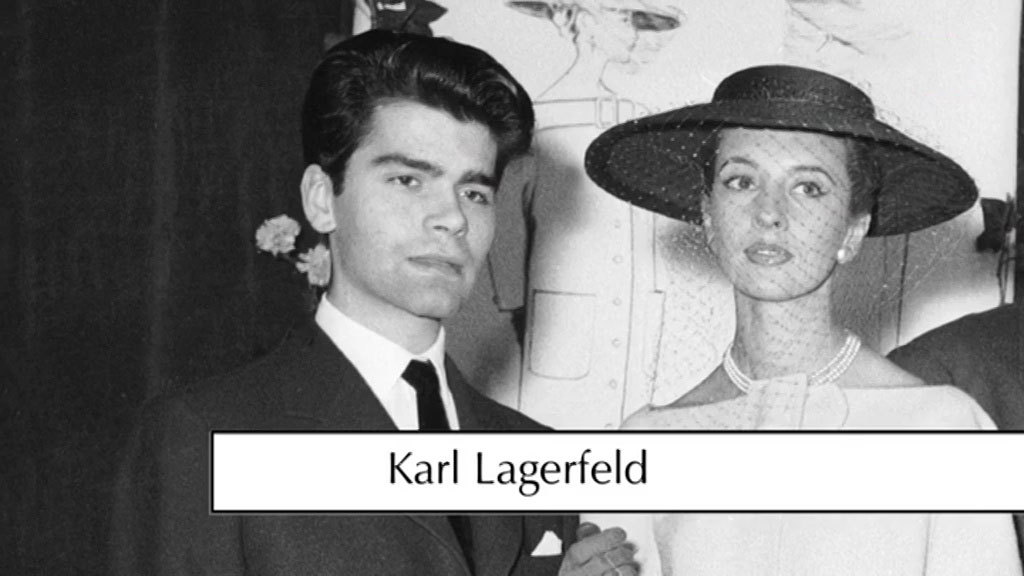
In 1954, after finishing school, Saint Laurent enrolled at the Chambre Syndicale de la Haute Couture. That November, he entered the International Wool Secretariat competition again and won first and third prizes in the dress category. A young Karl Lagerfeld won the coat category. Their meeting began a lifelong relationship that moved between friendship and rivalry.
De Brunhoff soon introduced Saint Laurent to Christian Dior. Dior was so impressed by his drawings that he hired him, first as a model maker and then as an assistant. The demands of the position led Saint Laurent to leave school in 1955 and devote himself completely to the House of Dior.
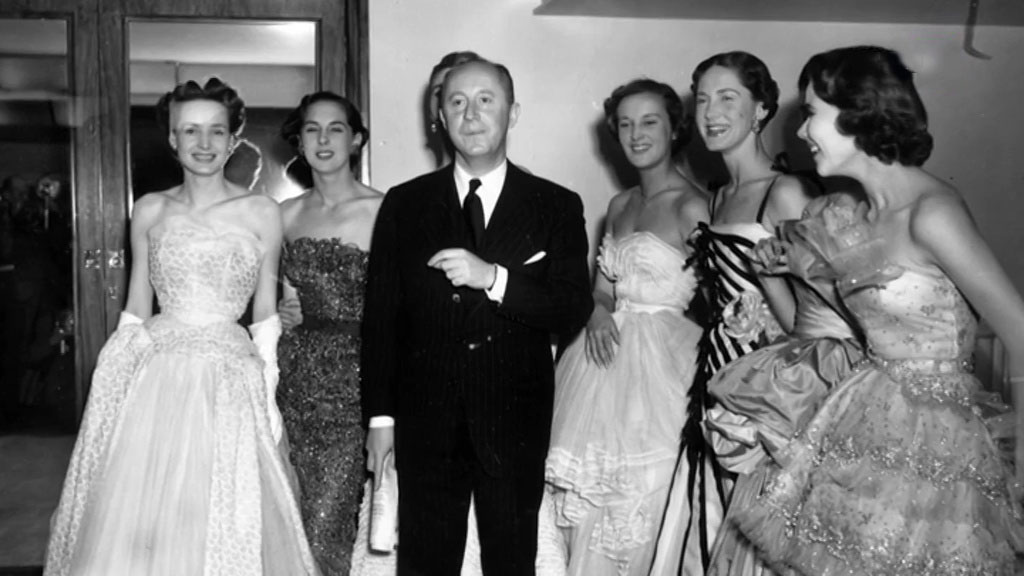
When Christian Dior died suddenly of a heart attack in 1957, the 21-year-old Saint Laurent was appointed artistic director in accordance with Dior’s wishes. He had inherited leadership of the world’s most prestigious couture house at an extraordinarily young age.
The “Little Prince” of Dior
Saint Laurent’s first collection for Dior, presented in 1958, introduced the trapeze silhouette. It moved away from the narrow waists and restrictive skirts associated with the previous decade, replacing them with lighter, shorter dresses that flowed freely from the shoulders. By eliminating corsets and using softer fabrics, he gave women greater comfort and freedom of movement.
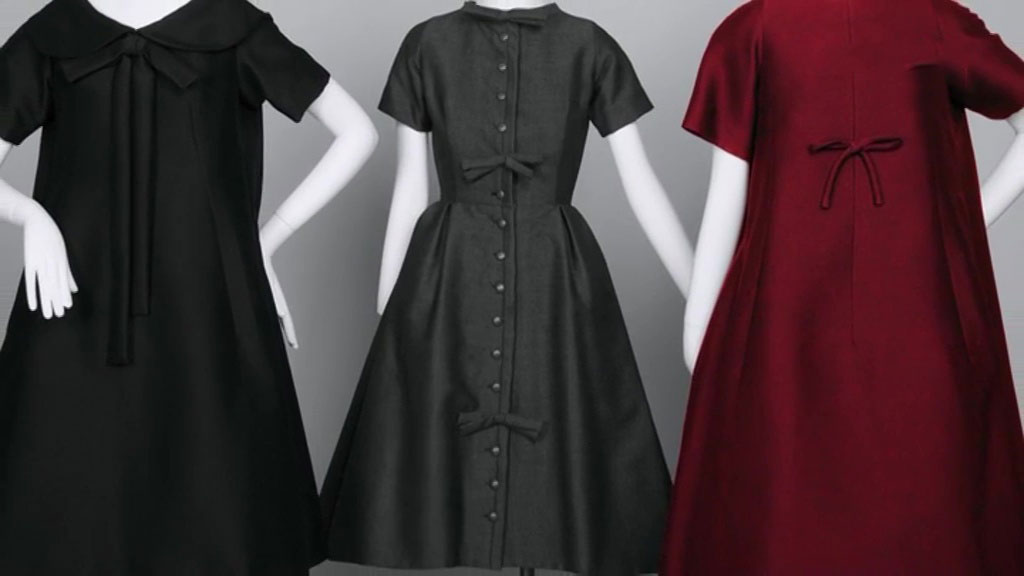
The international press celebrated him as the “Little Prince,” the brilliant young heir to Christian Dior. His success was not merely artistic: during his brief period at the head of Dior, the house accounted for an enormous share of France’s fashion exports. Royalty and film stars sought out his designs. In 1959, Farah Diba wore a Dior gown created by Saint Laurent when she married the Shah of Iran.
Yet his growing interest in youth culture and street style soon brought him into conflict with Dior’s conservative clients. At the beginning of the 1960s, he presented leather jackets, dark coats, and other designs inspired by the world beyond elite salons. Critics considered the collection too radical, and traditional customers were unsettled by his rejection of the house’s established codes.
In September 1960, Saint Laurent was drafted into the French army. He did not want to take part in the conflict and suffered a severe nervous breakdown after enduring ridicule and harassment. He was admitted to the psychiatric unit of the Val-de-Grâce military hospital, where he remained for more than two months. The experience left him physically weakened and dependent on tranquilizers for many years.
While he was hospitalized, Dior owner Marcel Boussac replaced him with the more conservative Marc Bohan. When Saint Laurent returned to Paris, he discovered that the position he cherished was gone.
A Fashion House of His Own
Pierre Bergé had first seen Saint Laurent at Christian Dior’s funeral, although they were formally introduced later at a dinner arranged by Harper’s Bazaar editor Marie-Louise Bousquet. Bergé quickly became Saint Laurent’s partner in both life and business. After Saint Laurent’s dismissal, he helped him recover, encouraged him to sue his former employer, and used the proceeds from the successful case to establish an independent couture house.
The House of Yves Saint Laurent presented its first collection in 1962 at 30 Rue Spontini in Paris. The audience included journalists, aristocrats, artists, and designers. Writer Françoise Sagan gave the young couturier a standing ovation. Among the collection’s most admired pieces was the trench coat, a garment originally associated with British military officers. By adapting it for women, Saint Laurent began a lifelong project: taking established masculine dress codes and turning them into symbols of feminine elegance and independence.
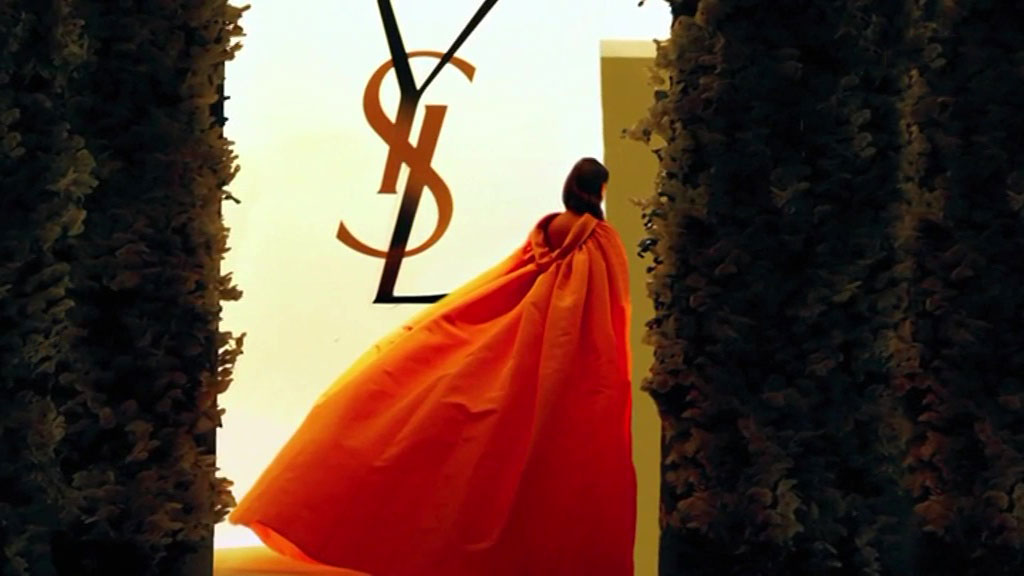
The new house was represented by the now-famous vertical YSL monogram created by graphic designer Cassandre. Its success also allowed Saint Laurent and Bergé to begin collecting art. Their first joint purchase was a Senufo bird sculpture, the starting point of what would become one of the world’s most remarkable private collections.
Cinema, Art, and the Birth of Modern Classics
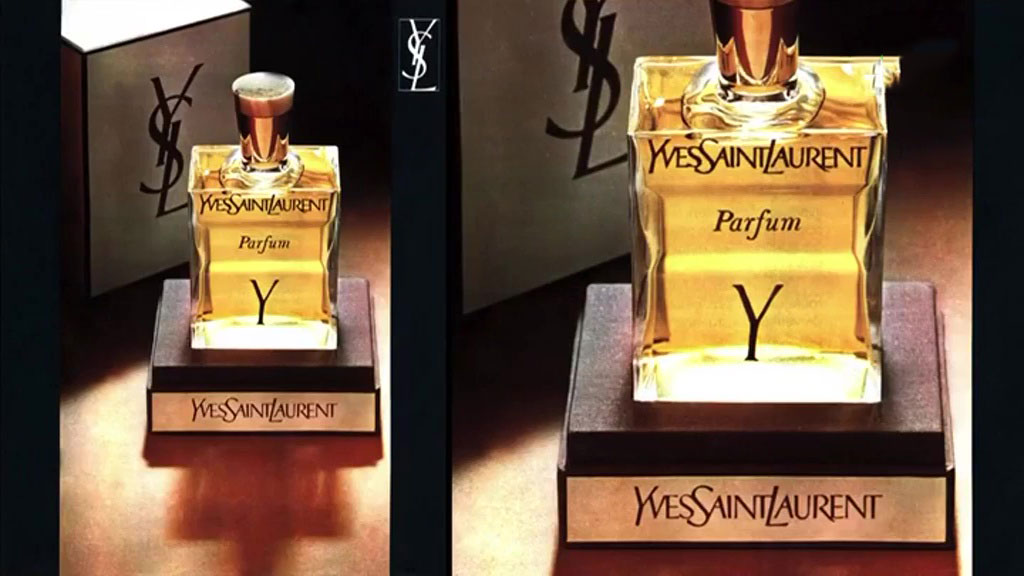
Saint Laurent’s work soon expanded beyond the runway. In 1963, he designed costumes for Claudia Cardinale and Capucine in Blake Edwards’s comedy The Pink Panther. That year he also created a spectacular feathered costume for dancer Zizi Jeanmaire’s show Champagne Rosé. In 1964, he introduced his first fragrance, Y, beginning a long association with perfumery.
In 1965, Catherine Deneuve asked him to create a dress for a meeting with Queen Elizabeth II. The commission began a friendship that lasted for decades. Saint Laurent later designed Deneuve’s wardrobe for Luis Buñuel’s Belle de Jour, released in 1967, helping shape one of the most memorable images of elegance in European cinema.
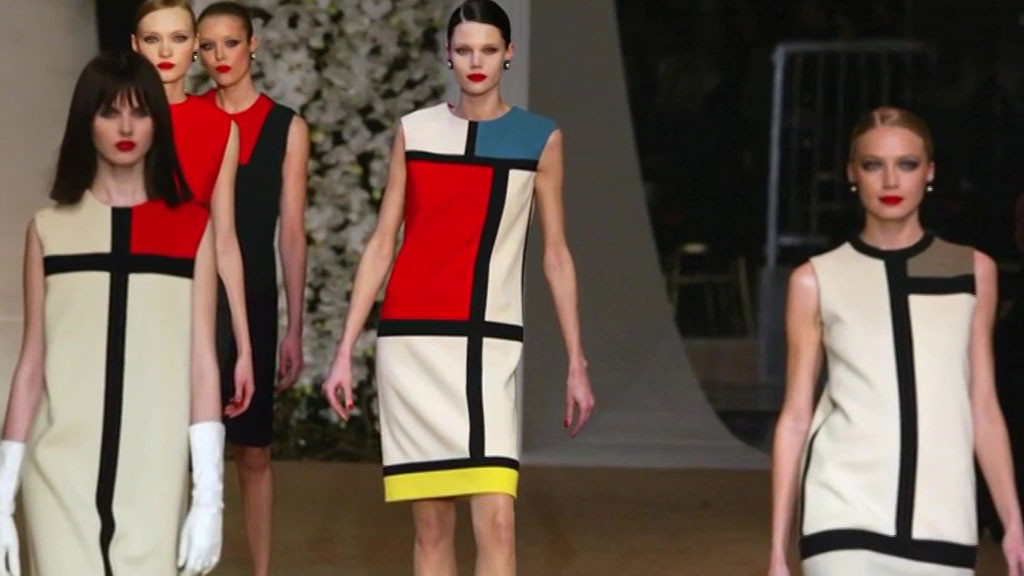
The year 1965 also produced one of his defining achievements: the Mondrian collection. Saint Laurent transformed the geometric compositions and strong primary colors of Dutch painter Piet Mondrian into carefully constructed dresses. The collection demonstrated that fashion could enter into a serious dialogue with fine art. He also created designs honoring Tom Wesselmann and Serge Poliakoff, beginning a tradition of collections inspired by painters, writers, and other artists.
In 1966, Saint Laurent introduced sheer blouses that challenged conventional ideas of modesty and celebrated the female body. Two years later, he went further with a transparent organza dress finished with an ostrich-feather belt.
His most influential 1966 creation was Le Smoking, a tuxedo adapted for women. The traditional smoking jacket had belonged to an exclusively male world, but Saint Laurent reshaped its lines for the female body and turned it into an enduring symbol of confidence, sophistication, and sexual freedom.
That same year, he opened Saint Laurent Rive Gauche at 21 Rue de Tournon in Paris. It was the first ready-to-wear boutique established by a leading couturier under his own name. The line offered carefully designed, more affordable clothing for women who could not buy haute couture. Saint Laurent was not simply selling less expensive garments; he was democratizing fashion and recognizing the changing role of women in modern society.
Morocco, New Muses, and a Wider World
During the second half of the 1960s, Saint Laurent and Bergé began traveling to Marrakech. The city became Saint Laurent’s refuge from the disciplined pressure of Paris and a vital source of creative energy. Moroccan colors, gardens, clothing, and light entered his work. In 1968, he adopted the caftan, whose relaxed shape and rich variety of fabrics would reappear throughout his later collections.
Saint Laurent surrounded himself with a close circle of muses and friends. In 1967, he met Betty Catroux at a Paris nightclub. Tall, slender, and androgynous, she represented the bold modern spirit of his brand. Loulou de la Falaise, whom he met around the same period and who joined his studio in 1972, brought an instinctive ability to combine luxury with objects found in antique shops and flea markets. She remained responsible for accessories for approximately 30 years.
For his spring/summer 1967 collection, Saint Laurent drew inspiration from Africa, using materials such as raffia, wood, and straw and referencing Bambara sculpture from Mali. He also helped change the racial boundaries of high fashion. Fidelia became one of the first Black models to appear in his couture presentations, and later muses included Iman, Katoucha Niane, Rebecca Ayoko, Naomi Campbell, Tyra Banks, and Alek Wek.
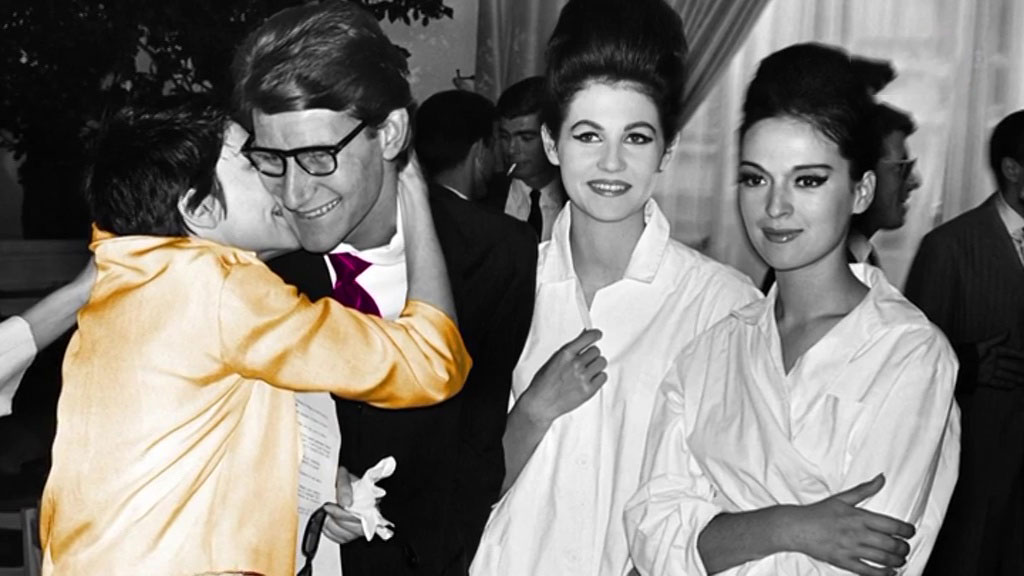
In 1967, he introduced both his first trouser suit and the safari jacket. The suit reworked another male uniform with wide trousers, a fitted waist, narrow sleeves, ties, jewelry, hats, and high heels. The safari jacket, originally created for a Vogue photo shoot, became a classic through its light-brown cotton, deep neckline, and four large pockets.
The upheavals of May 1968 inspired Saint Laurent further. He responded to the street with leather jackets, miniskirts, and unconventional combinations that reflected the rebellious energy of a younger generation. He also introduced the jumpsuit, turning a practical garment associated with aviators into a sensual piece that followed and revealed the body. International expansion followed, with a New York boutique opening in 1968 and a London store in 1969.
Scandal, Celebrity, and Cultural Journeys
In 1970, Saint Laurent and Bergé moved into a duplex apartment at 55 Rue de Babylone. There they assembled an eclectic collection that included works by Goya, Matisse, Mondrian, Brâncuși, Géricault, Burne-Jones, and Andy Warhol, along with Art Deco pieces and Egyptian and Roman antiquities.
Saint Laurent’s 1971 Liberation collection, inspired by clothing from the Second World War, featured short dresses, platform shoes, shoulder pads, dramatic makeup, and elaborate hairstyles. Critics condemned it, and the collection became known as “Scandal.” The controversy only strengthened the emerging retro movement and demonstrated Saint Laurent’s willingness to confront public taste.
That year, Bianca Jagger married Mick Jagger in Saint-Tropez wearing a white Saint Laurent skirt suit with a tuxedo-style jacket. Saint Laurent also launched the fragrances Rive Gauche and Pour Homme, promoting the latter with a provocative nude portrait photographed by Jeanloup Sieff. In 1972, Jane Fonda accepted the Academy Award for Best Actress in a restrained black Saint Laurent trouser suit—another striking example of the designer’s new visual language of female authority.
Saint Laurent’s friendship with Andy Warhol also deepened during this period. Warhol painted a series of portraits of him in 1972 and later depicted his beloved French bulldog Moujik. Saint Laurent owned four French bulldogs over the years, all bearing the same name, and they were constant companions during his creative work.
In the second half of the 1970s, Saint Laurent embarked on some of his richest cultural journeys. His 1976 Operas and Russian Ballets collection evoked imperial Russia through chiffon, silk, velvet, gold lamé, and intense color. The 1977 Espagnoles et Romantiques collection drew on bullfighting dress, flamenco, gypsy corsets, and the atmosphere of Carmen. A Chinese-inspired collection followed and was linked to the launch of Opium. The fragrance’s provocative name caused immediate controversy, while its spectacular 1978 launch aboard a luxurious yacht confirmed Saint Laurent’s gift for turning perfume into cultural theater.
Recognition and Later Work
By 1980, Saint Laurent and Bergé had purchased the Jardin Majorelle in Marrakech, saving the 1920s villa and its extensive gardens from redevelopment. It became their private oasis and one of the places most closely associated with the designer’s life.
Saint Laurent continued to unite fashion with literature and art. In 1980, he paid tribute to poets including Louis Aragon, Guillaume Apollinaire, and Jean Cocteau, even incorporating literary references into his designs. A lavish Shakespeare-inspired wedding dress brought together fashion, theater, and literature. His autumn/winter 1981 collection honored artists such as Henri Matisse and Fernand Léger through color and pattern.
In 1983, Saint Laurent launched Paris, a fragrance built around roses and violets as a tribute to the city he loved. That same year, the Metropolitan Museum of Art in New York presented Yves Saint Laurent: 25 Years of Design, curated by Diana Vreeland. It was the museum’s first retrospective devoted to a living fashion designer—an acknowledgment that his work had already entered cultural history.
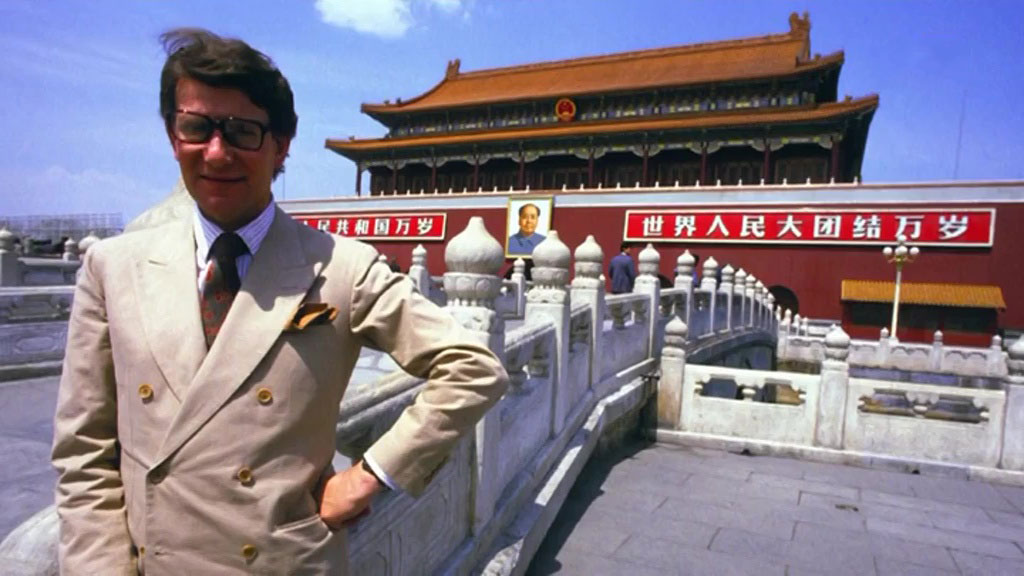
Further recognition came in 1985, when the exhibition Yves Saint Laurent 1958–1985 opened at the Palace of Fine Arts in Beijing. That year, he also designed costumes for Isabelle Adjani in Luc Besson’s film Subway.
In 1989, under Bergé’s leadership, the company was listed on the Paris Stock Exchange. Although the romantic relationship between the two men had ended earlier in the decade, their business partnership, friendship, and loyalty endured.
For his spring/summer 1990 collection, Saint Laurent honored figures who had shaped his imagination and career, including Christian Dior, Catherine Deneuve, Zizi Jeanmaire, Marilyn Monroe, Marcel Proust, and painter Bernard Buffet. The presentation recreated the atmosphere of Proust’s aristocratic world, bringing memory, literature, and fashion together on the runway.
In 1993, Saint Laurent released a fragrance called Champagne. A legal dispute over the protected regional name led to its withdrawal and relaunch as Ivresse, the French word for intoxication. In 1997, the brand opened its first store in Moscow. Saint Laurent then stepped away from designing the ready-to-wear line. Alber Elbaz assumed responsibility for it in 1998, followed by Tom Ford after the Gucci Group acquired the company in 1999.
The scale of Saint Laurent’s achievement was dramatically displayed at the 1998 FIFA World Cup final, when 300 of his historic designs filled the field of the Stade de France in a vast retrospective presentation set to Ravel’s Boléro and live percussion.
Farewell and Legacy
Although he had withdrawn from ready-to-wear, Saint Laurent continued to lead haute couture until 2002. That year, he formally announced his retirement and presented a final retrospective show at the Centre Pompidou. His farewell brought together many of the models and friends who had accompanied him throughout his career.
Yves Saint Laurent died in Paris on June 1, 2008, after a battle with brain cancer. His ashes were scattered in the Jardin Majorelle, the Moroccan sanctuary that had given him peace and inspiration for so many years.
After his death, Pierre Bergé devoted himself to protecting Saint Laurent’s legacy. In 2009, the art collection they had assembled over more than four decades was sold at Christie’s for more than €373 million in what became known as the “auction of the century.” Saint Laurent’s exceptional library of rare books was later auctioned by Sotheby’s for more than €11 million. Much of the proceeds supported AIDS-related causes and the Pierre Bergé–Yves Saint Laurent Foundation.
The fashion house continued under new creative leadership. Stefano Pilati became creative director in 2004. Hedi Slimane succeeded him in 2012 and renamed the ready-to-wear label Saint Laurent. Anthony Vaccarello took over in 2016. In 2017, museums devoted to Yves Saint Laurent opened in Paris and Marrakech. Pierre Bergé died later that year.
Saint Laurent’s greatest legacy lies in the confidence he gave women. He reimagined the tuxedo, trench coat, trouser suit, safari jacket, jumpsuit, tunic, and caftan, transforming garments associated with work, war, or masculinity into instruments of freedom and elegance. He listened to the streets while remaining deeply connected to painting, literature, theater, music, and the grandeur of French couture.
Coco Chanel once described Saint Laurent as her spiritual heir. He, in turn, said that Chanel had freed women and that he had given them power. The statement captures the lasting importance of his work. Yves Saint Laurent did not merely change how women dressed; he changed what clothing allowed them to express about independence, identity, sensuality, and authority. For him, the true purpose of fashion was never the dress alone, but the woman wearing it.